Download the app here: ACLF Board Application Form 2019 Rolling Application We are looking for CLP alums, partners, advisory board members, former board members, members of the API community, and anyone else who is interested in revisioning/realigning ACLF, enacting change and supporting our community through the development of emerging leaders. We see this as a … Continue reading Accepting Applications to Become an ACLF Board Member

ACLF: A Year in Chrysalis
We are taking a one-year break from running the Community Leaders Program. CLP will return in 2021! We did it. For 20 years, we have come together to build social justice-informed API leaders in the greater Seattle community. It has been beautiful, challenging, and rewarding. Thank you to every single CLP alum, board member, committee member, volunteer, … Continue reading ACLF: A Year in Chrysalis
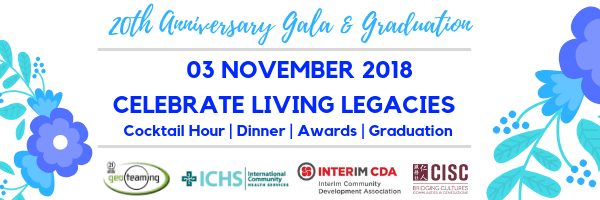
We’re calling YOU to be a living legacy with us!
It's a little over two weeks before our 20th Birthday and our Annual Gala & Graduation Event: Living Legacies! ACLF has a long history of being in the community, this was not without its own challenges and victories. We still have a vision and we see our incredible community leaders here in Seattle and across … Continue reading We’re calling YOU to be a living legacy with us!
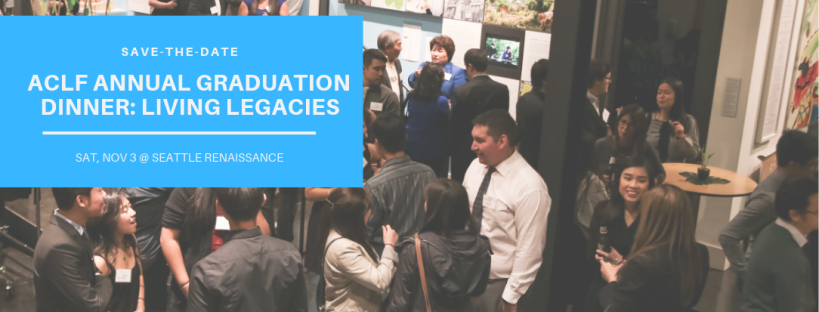
Buy Tickets for our Annual Gala & Graduation!
We are celebrating 20 years of existence this year at the Renaissance Hotel with you! We could not have existed without your support, feedback, hard work, and leadership. As Asian Pacific Islanders, we occupy an interesting position in social justice work and it's very important we work at our awareness, push for collaboration across sectors … Continue reading Buy Tickets for our Annual Gala & Graduation!

Let’s get an ACLF Reunion started!
One of our goals for this year as the board is to engage our alumni more intentionally and to provide the space for the past cohorts to meet with one another. Alas, our beloved community member, Chevon Powell was able to throw this together for us! All CLP alums are invited to the ACLF Community … Continue reading Let’s get an ACLF Reunion started!
Welcome Braden & John to the ACLF Board!
Braden Hirasawa grew up in the Bay Area and completed his undergraduate studies at the University of California, Merced. With a group of friends, he co-founded the Nikkei Student Union on campus to bring awareness of the rich Japanese-American history within the Central Valley. After graduating in 2010 with a degree in Human Biology, Braden … Continue reading Welcome Braden & John to the ACLF Board!
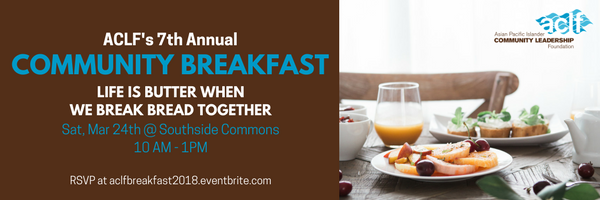
Have you eaten yet?
It's that time of year again! As many of you may know, our community shows love through food. Come to our Community Breakfast to be fed and meet our incoming cohort of Community Leaders. The building is ADA accessible, there's a ramp on the east side of the building. There is a small parking lot … Continue reading Have you eaten yet?
We’re looking for our 2018 CLP Cohort!
ACLF is now accepting applications for the 2018 Community Leaders Program! If you are interested in applying or know someone who would be interested in our program, please join us at our CLP information session to learn more about the program and application process! You can also email us at aclfnw@aclfnorthwest.org. CLP 2018 Info Session … Continue reading We’re looking for our 2018 CLP Cohort!
Announcing our Executive Board for 2017-2018!
On December 13, 2017, the Asian Pacific Islander Community Leadership Foundation (ACLF) board of directors elected: Alex Johnson, Board Chair Marissa Vichayapai, Vice Board Chair Maria Williams, Secretary Florence Sum, Treasurer Chosen for their experience, vision, values-alignment with the mission of ACLF, and dedication to the community, and their respective skills, the new executive board … Continue reading Announcing our Executive Board for 2017-2018!
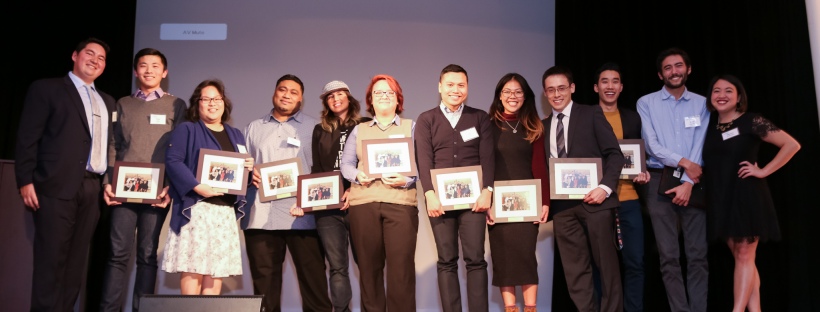
Thank you for the Dinner, ACLF Fam!
It's almost been a month since we saw you last. Can you believe we completed our 18th Graduation & Celebration Dinner for the CLP cohort? THANK YOU for helping to make this possible and for all of those who were able to join us on a Saturday evening. We are still channeling the energy from the performances, incredible community, delicious … Continue reading Thank you for the Dinner, ACLF Fam!
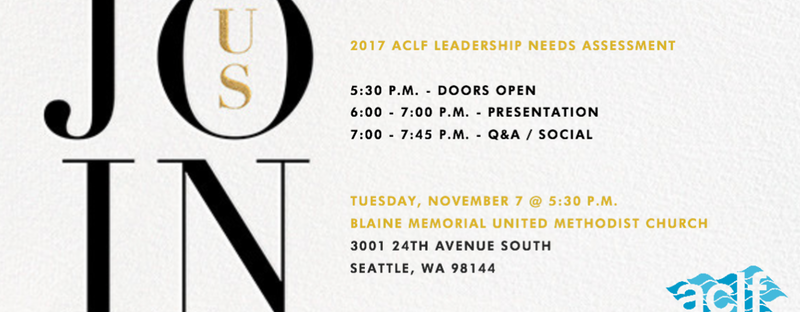
CLP 2017 invites you to their Project Report Back!
The Community Leadership 2017 cohort is presenting their project, a community needs assessment on identifying leadership gaps within the Asian and Pacific Islander community in the greater Seattle area. Please join us for a night of community and meaningful dialogue. Event Details Tues, Nov 7th @ 5:30PM Blaine Memorial United Methodist Church 3001 24th Ave S Seattle, … Continue reading CLP 2017 invites you to their Project Report Back!
Advocacy Journalism Fellowship Program Accepting Applications
Advocacy Journalism Fellowship Program is a joint collaboration between ACLF and the International Examiner. Fellows will receive seven months of training and be assigned to one of the following four community groups (Cambodian, Pakistani, Samoan, and Thai) identified as being under-represented within the larger Asian Pacific Islander American community: APPLY TO BE A FELLOW: https://goo.gl/forms/dAnyAJrRgSNARec93 QUALIFICATIONS: … Continue reading Advocacy Journalism Fellowship Program Accepting Applications
Welcome Tony Vo to the ACLF Board!
Tony is from White Center and grew up in Rainier Beach and High Point, Washington. His parents fled Viet Nam from political persecution to provide the family a brighter future. As an undergraduate at the University of Washington, Tony founded a student organization named Asian Coalition for Equality that highlights invisibilities of the Asian community. … Continue reading Welcome Tony Vo to the ACLF Board!
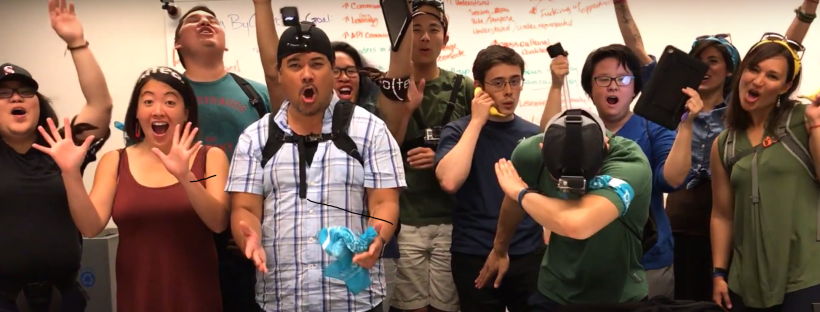
The 2017 CLP cohort are half way through!
On July 22, 2017: The 2017 CLP cohort met with Alex Johnson and Marissa Vichayapai at the Seattle Central Library at the mid-point of their ACLF experience. The first half of the retreat was a check-in with the cohort about where they were at and discussed their group project. This year’s group project will be … Continue reading The 2017 CLP cohort are half way through!
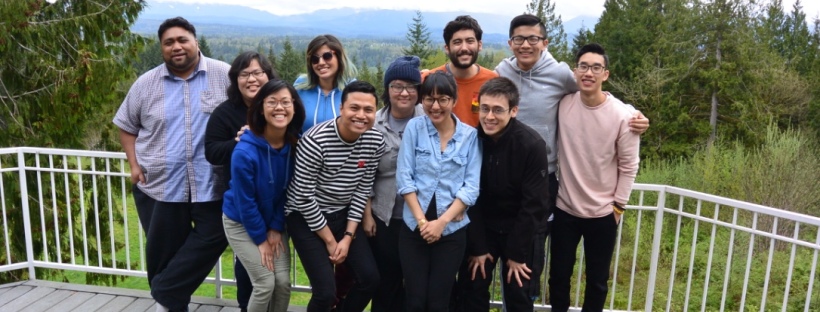
Come Meet our 2017 CLP Cohort on May 10th!
ACLF would like to invite you to a community reception for our 2017 Community Leaders Program class scheduled for Wed, May 10, 2017 at Eastern Cafe from 5:30 PM - 8:00 PM ACLF was organized in 1998 in response to the need to develop community-based leadership education program in the Asian Pacific Islander (API) community … Continue reading Come Meet our 2017 CLP Cohort on May 10th!
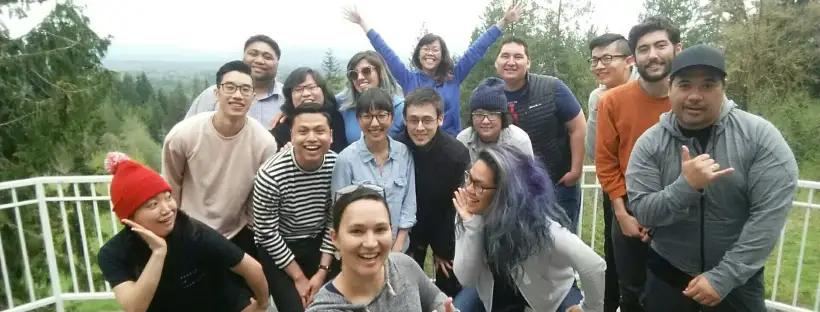
Presenting our 2017 CLP Cohort!
Here's our 2017 CLP Cohort: Troy Chen I was born in Shanghai, China and raised in Phoenix, Arizona. I came to Seattle in 2014 to pursue a bachelor degree in Political Science at the University of Washington. I speak three languages (Mandarin, English, and Spanish) and trying to learn more (French and Korean). I had … Continue reading Presenting our 2017 CLP Cohort!
APAICS National Leadership Academy in Washington D.C. is open to applicants!
Are you interested in running for public office? The 2017 National Leadership Academy is a two-day leadership training program in Washington, DC for current elected officials and individuals seeking to run for public office. The program consists of interactive leadership training with topics ranging from planning your campaign, developing and telling your campaign story, base building and outreach, … Continue reading APAICS National Leadership Academy in Washington D.C. is open to applicants!
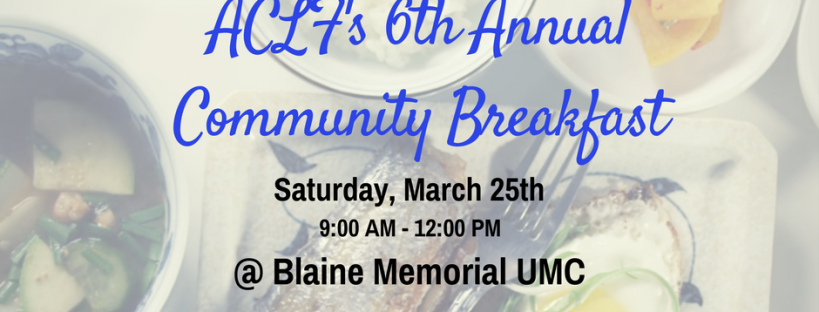
ACLF’s 6th Annual Community Breakfast!
Please join us for our 6th Annual Community Breakfast! Come and meet our incoming 2017 Community Leaders Program class, reconnect with alumni, and find out what's in store for ACLF for 2017. Date: Saturday, March 25, 2017 Time: 9:00AM to 12:00PM Where: Blaine Memorial United Methodist Church. Register and buy tickets here
Now accepting applications for the 2017 Community Leaders Program
ACLF is now accepting applications to the 2017 Community Leaders Program! If you are interested in applying or know someone who would be interested in our program, please join us at our CLP information session to learn more about the program and application process! You can also email us at aclfnw@aclfnorthwest.org. CLP 2017 Info Session … Continue reading Now accepting applications for the 2017 Community Leaders Program
Asian Pacific Islander Community Leadership Foundation elects it’s executive board for 2017
Randon Aea, Alex Johnson, Marissa Vichayapai, Florence Sum elected as executive board. On January 8, 2017, the Asian Pacific Islander Community Leadership Foundation (ACLF) board of directors elected Randon Aea Board Chair, Alex Johnson Board Vice Chair, Marissa Vichayapai Board Secretary, and Florence Sum Board Treasurer during their board retreat in West Seattle. Chosen for … Continue reading Asian Pacific Islander Community Leadership Foundation elects it’s executive board for 2017
Thank you for attending the Community Conversation Forum!
A big thank you to all who attended the Community Conversation Forum hosted by ACLF’s 2016 Community Leaders class this past Saturday, Oct. 8th. It was great to have the opportunity to meet so many new faces and fantastic to see so many young leaders in the same room. Participant’s shared personal stories around challenges … Continue reading Thank you for attending the Community Conversation Forum!
Save-the-Date for our 2016 Annual Graduation Dinner!
It's time to celebrate our 16th CLP Class and we want to celebrate it with you! The ACLF Annual Graduation Dinner & Fundraiser will be at the Wing Luke Museum in the Chinatown/International District. We're excited to see you there and please invite others to save the date with you! Talk to a 2016 CLP class … Continue reading Save-the-Date for our 2016 Annual Graduation Dinner!
Introducing the 2016 Community Leaders Program Class
Genesis Gavino Genesis Gavino is a Senior Management Fellow with the City of Tacoma's Neighborhood and Community Services Department where she analyzes and develops policy to address human and social issues specific to homelessness and housing stability. She is Filipino, born and raised in American Samoa and committed to making a difference in her community. … Continue reading Introducing the 2016 Community Leaders Program Class
ACLF welcomes new board members
ACLF welcomes Marissa Vichayapai and Alex Johnson to its Board of Directors. Marissa is a Programs Director for 21 Progress and loves developing immigrant youth and youth of color for leadership with a social justice and progressive lens. She believes this work is of the utmost importance to rising youth, who will peek at a time … Continue reading ACLF welcomes new board members
 Asian Pacific Islander Community Leadership Foundation